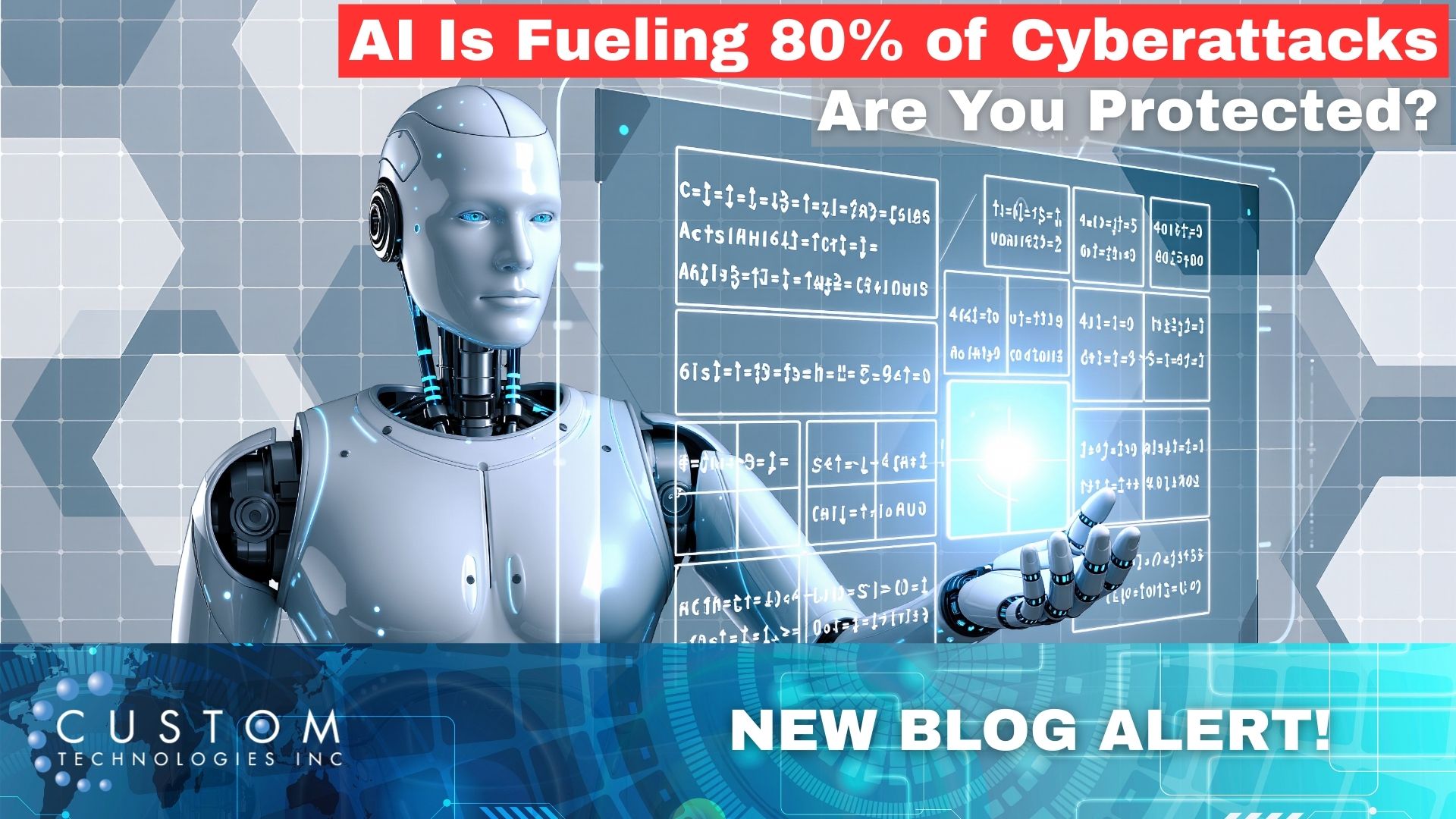
Cybercrime has officially entered a new era — and it’s no longer run by people sitting behind keyboards. Today, the majority of modern attacks are being launched, accelerated, or enhanced by artificial intelligence.
Recent findings show that AI is now behind roughly 80% of ransomware attempts. That means four out of every five attacks hitting small and midsize organizations aren’t crafted by humans… they’re being generated and deployed by automated systems that never sleep.
And ransomware isn’t the only threat getting an upgrade. AI is now being used to:
- Write hyper-realistic phishing emails that look identical to real messages
- Crack weak or reused passwords in seconds
- Outsmart CAPTCHA tools meant to verify real users
- Generate deepfake calls or voicemails that mimic customer service agents, vendors, and even executives
Why this matters for Metro Atlanta businesses
Cybercriminals using AI have one major advantage: speed at scale.
While a security team (or a busy business owner) can check only a handful of suspicious activities at a time, AI can attempt thousands of break-in methods per minute. And remember — your business has to defend every entry point. An attacker only needs one opening.
That imbalance is exactly why AI-driven threats are growing so quickly across industries here in Metro Atlanta, from construction firms in Cobb County to professional services firms in Marietta and Kennesaw.
Old security methods can’t keep up
Traditional tools — basic antivirus, manual patching, occasional updates — simply aren’t designed to defend against attacks that evolve in real time.
AI-powered malware can rewrite itself, hide its footprint, and attempt new strategies faster than humans can respond. That means businesses need a smarter, more layered security approach.
The good news: AI can defend your business too
AI-driven security tools are now capable of:
- Detecting and shutting down suspicious behavior within seconds
- Predicting which systems or employees are most likely to be targeted
- Automating patching and threat response
- Setting digital “tripwires” to catch attackers before they get inside
But technology alone isn’t enough. The strongest defense includes:
- Continuous patching and updates
- AI-enabled cybersecurity tools
- Human oversight to verify and adjust
- Clear policies for passwords, access, and data protection
AI-powered threats aren’t going away — but you can stay ahead
Cybercriminals will continue using AI because it makes them faster and more effective. But Metro Atlanta businesses that take proactive steps now won’t be the easy targets attackers hope for.
If you’re unsure whether your current protections can withstand today’s AI-enhanced threats, now is the time to get clarity.
Let us manage your network so you can manage your business.
Reach out if you’d like a security review or just want a second opinion.
🔍 FAQ: Protecting Your Business from AI-Powered Cyberattacks
1. Are AI-powered cyberattacks really more dangerous than traditional attacks?
Yes. AI allows attackers to automate tasks, adapt in real time, and attempt thousands of break-ins per minute. This speed and scale make AI-driven attacks far more difficult to detect and stop than traditional threats.
2. Why would cybercriminals target a small or midsize business in Metro Atlanta?
Because SMBs often have weaker protections than large enterprises — but still store valuable data. Attackers know many Atlanta businesses rely on outdated tools or inconsistent patching, making them easier and faster targets.
3. Can basic antivirus software protect my business from AI-driven threats?
Unfortunately, no. Traditional antivirus tools detect known threats, but AI-powered malware can rewrite itself automatically. Modern protection requires AI-enhanced security tools, behavioral monitoring, and layered defenses.
4. How can I tell if my business has already been targeted by AI-generated phishing?
Signs include unusual emails that look extremely realistic, employees reporting suspicious login prompts, or unexpected MFA requests. AI makes phishing messages harder to spot, so employee training and monitoring tools are essential.
5. Do deepfake phone calls affect small businesses too?
Yes. Attackers can generate voice clones of vendors, customers, or even executives. These can be used to request payments, credentials, or sensitive information. SMBs in finance, real estate, logistics, and professional services are especially vulnerable.
6. What’s the best way to protect my business from AI-enhanced attacks?
The strongest approach is layered security, including:
- Real-time monitoring and behavior-based threat detection
- Automatic patching and updates
- AI-enabled security tools
- Multi-factor authentication
- Strong password and access policies
- Ongoing employee cybersecurity training
7. Is my business too small to need AI-powered security solutions?
Not at all. AI makes attacks inexpensive and scalable, meaning cybercriminals can target hundreds of small businesses at once. Many SMB attacks are automated, not personal — so every business is a viable target.
8. How often should my business review its cybersecurity setup?
At minimum, once per quarter. But if your business handles sensitive data, works remotely, or uses cloud services, monthly reviews are recommended. Threats evolve fast, and so should your defenses.
9. Can an MSP really prevent AI-based cyberattacks?
An MSP can’t stop every attempt — no one can — but a good MSP dramatically reduces your risk by:
- Closing security gaps
- Monitoring systems 24/7
- Responding quickly to alerts
- Deploying the right AI-enabled tools
- Training your team
The goal is to make your business a hard target, so attackers move on.
10. How do I know if my current protections are enough?
If you’re unsure, they’re probably not. Most SMBs discover gaps only after an incident. A proactive security assessment is the safest and most cost-effective way to find weaknesses before attackers do.